
Food industry automation: electrical installation, control and regulations
Industrial processes · Food industry
Food industry automation means that the plant receives, doses, processes, cleans and packs using programmable logic controllers (PLCs), measuring instruments and a supervisory system (SCADA) that run the recipes, monitor the process limits and keep a record of every batch. Automating a food processing plant usually covers raw material intake and dosing, heat treatment, equipment cleaning (CIP), packaging and the refrigeration, compressed air and water utilities.
All of this rests on the electrical installation, which here has to cope with condensation, hose-down cleaning, cold or dust. At ER Ingeniería we have been carrying out electrical installations and industrial automation since 1981 and have automated 45 agri-food factories. If you are looking for someone to design and build it, you will find it on our electrical installations for the food industry page.
The short version: before choosing the PLC, you need to know what type of location each area is under the REBT, whether there is grain or flour dust with a risk of explosion, which machines are going to be modified and which HACCP points the system must record. That determines the panels, the cabling and whether the work needs a design project.
On this page
- What is automated in a food processing plant
- Where to start with automation
- The electrical installation under the REBT
- Electrical panels: UNE-EN IEC 61439 and what usually goes wrong
- Machine safety: the Directive today, the Regulation in 2027
- Hygiene: HACCP and an installation that can be cleaned
- Grain and flour dust: explosive atmospheres
- Control, data and traceability
- How we do it at ER Ingeniería
- Frequently asked questions
- Sources
What is automated in a food processing plant
A food plant is a chain of very different areas: dust at intake, condensation in processing, pressurised water in cleaning and sub-zero temperatures in freezing. Each area has its own automation and its own electrical requirements.
| Plant area | What is automated | What usually goes wrong | What the installation requires |
|---|---|---|---|
| Intake, silos and grain or flour storage | Intake weighing, conveying to silos, levels, incoming batch | Weighings written down by hand; dust inside junction boxes and motors | Classify the combustible dust zones (ITC-BT-29 and RD 681/2003) [1] [2] |
| Dosing and mixing | Recipes in the PLC, dosing by weight or flow, interlocks | Recipes changed without a trace; sequences that stop without saying why | Control panels verified to UNE-EN IEC 61439 [3], with spare capacity |
| Thermal processing, cooking, fermentation | Temperature, pressure and time loops; deviation alarms | Limits monitored only on paper | Recording of HACCP critical limits and corrective actions [4]; damp or high-temperature location (ITC-BT-30) [1] |
| CIP cleaning and wash rooms | Sequences with time, temperature and concentration; record of each cycle | Switchgear inside the washdown area; cable glands that let water in | Wet location: IPX4, with control and protection outside the location or in an equivalent enclosure (ITC-BT-30) [1] |
| Cold rooms and freezer rooms | Compressors, defrost cycles and temperatures with logging and remote alerts | Night-time alarms that nobody receives | Very low-temperature location, below -20 °C (ITC-BT-30) [1] |
| Packaging and palletising | Counting, checkweighing, batch labelling, machine integration | Machines that do not communicate; stoppages with no recorded cause | Directive 2006/42/EC today and Regulation (EU) 2023/1230 from 2027 [5] [6] |
| Utilities: air, water, steam, pumping | Variable speed drives, on-demand starting, consumption per line | Equipment running with no demand; consumption only shows up on the bill | Water pumping over 10 kW needs a design project (ITC-BT-04) [1] |
Where to start with automation
A line can be automated and still keep stopping because of an overloaded panel or poorly coordinated protection. This is the order we follow:
- Look at what is already there: diagrams and certificates, available power, the condition of the panels, and how often each line stops and why. To put a figure on those stoppages we have a technical document for calculating the real cost of a stoppage.
- Classify the locations: damp, wet, very low temperature, dusty or with a risk of explosion. This determines the materials, the degree of protection and whether a design project is needed.
- Choose the first section by impact: where there are the most stoppages, batch errors or data written down by hand. It is often dosing or intake.
- Define the architecture before buying: panels, plant network, PLCs, SCADA and what is recorded per batch, so that each extension connects without redoing what came before.
- Legalise and document: design project or technical report, verifications, inspection when due and up-to-date diagrams.
ITC-BT-04 requires a design project for new industrial installations over 20 kW; for those in damp, wet, dusty or corrosive locations over 10 kW; and for those in locations with a risk of fire or explosion, whatever their power [1]. When extending or refurbishing, its section 3.2 adds three cases that also need a design project [1]:
- Extensions in special locations and major modifications. Extensions to installations in damp, dusty, corrosive, wet or fire- or explosion-risk locations, among other groups, and major modifications to any installation on that list.
- Extensions that cross the threshold. Those to an installation that was below its power threshold and exceeds it when extended.
- Extensions of more than 50%. Those to an installation that already had a design project, when, in one go or over several, they exceed 50% of the power provided for in it.
In a food plant almost every area falls into those groups, and the first case sets no minimum power: an extension in the wash room needs a design project, however small it is.
The electrical installation under the REBT
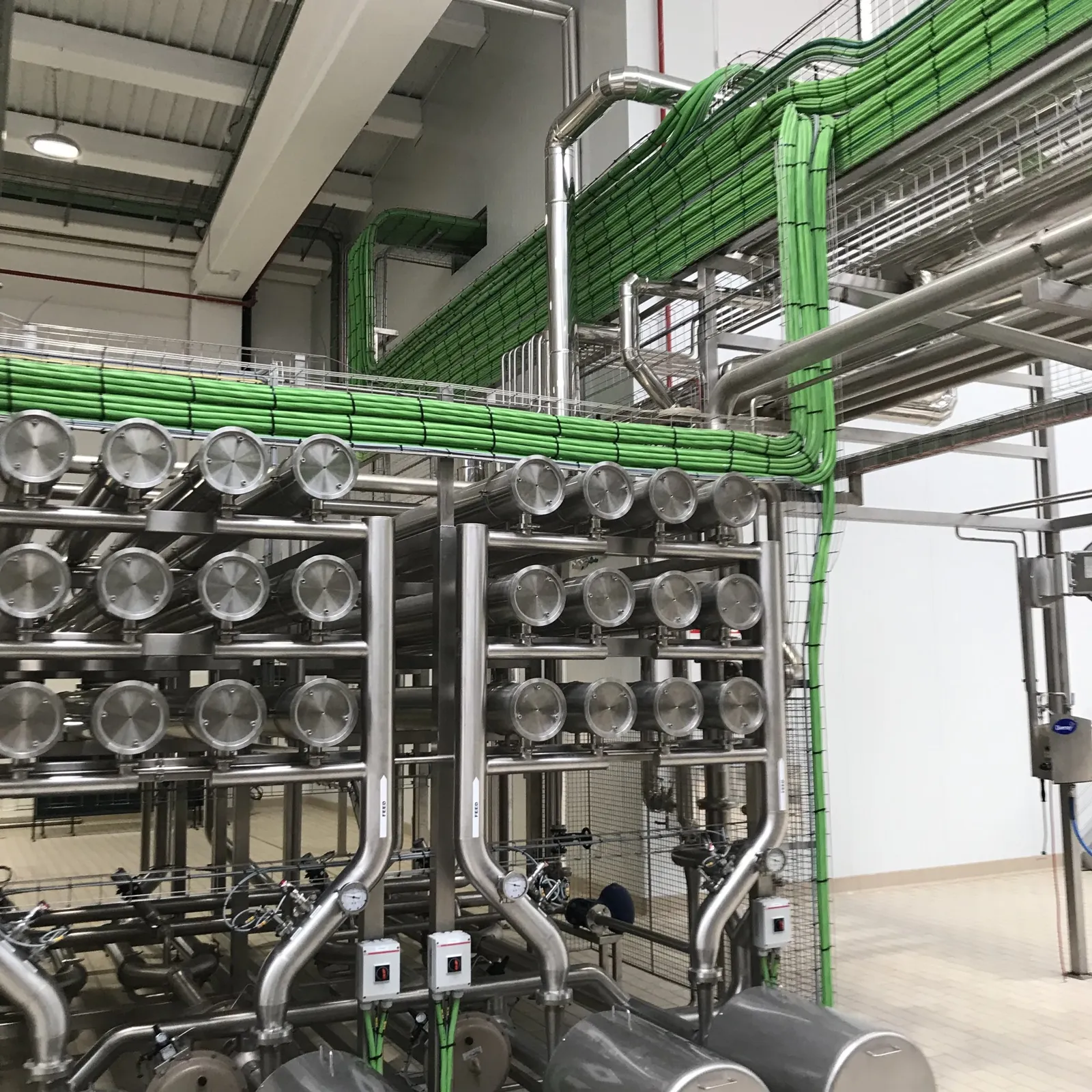
Real Decreto 842/2002 approves Spain's Low Voltage Electrotechnical Regulation (REBT) and its supplementary technical instructions [1]. In a food factory two of them carry the most weight: ITC-BT-30, for locations with special characteristics, and ITC-BT-29, for locations with a risk of fire or explosion [1].
| Type of location (ITC-BT-30) | How it is defined | Where it appears in the plant | What it requires |
|---|---|---|---|
| Damp | Condensation on the ceiling and walls, salt stains or mould, no drops | Process rooms with steam | Watertight wiring systems; IPX1 connections and switchgear; non-metallic covers and controls |
| Wet | Floors, ceilings and walls soaked; large drops or vapour for long periods; outdoors | Wash rooms, CIP areas, daily hose-down, outdoor loading docks | IPX4 wiring systems; control, protection and socket outlets outside the location or IPX4; protection at the origin of each incoming circuit; no portable equipment except with SELV or electrical separation |
| Corrosion risk | Gases or vapours that attack electrical equipment | Storage and dosing of cleaning chemicals | The wet-location requirements plus an outer covering unaffected by those gases |
| High temperature | Air that often exceeds 40 °C or stays above 35 °C | Areas around ovens and boilers | Plastic-insulated cables up to 50 °C with a current derating factor; above that, special cables |
| Very low temperature | Below -20 °C; the standard cites freezer rooms | Freezing tunnels and freezer rooms | Insulation and materials that do not deteriorate at that temperature |
Extract from ITC-BT-30 [1]. Dusty locations with no risk of explosion require at least IP5X for wiring systems and switchgear.
The wet-location rule that changes the design most is the one on control and protection: these devices go outside, and only where that is not possible are they allowed protected against water spray [1]. That is why in washdown areas we move the panels to a technical corridor or an electrical room.
ITC-BT-05 sets out which installations must be inspected by an accredited inspection body before being put into service: among others, industrial installations with a design project over 100 kW, wet locations over 25 kW and class I locations with a risk of fire or explosion. These same installations are inspected again every 5 years [1].
Electrical panels: UNE-EN IEC 61439 and what usually goes wrong
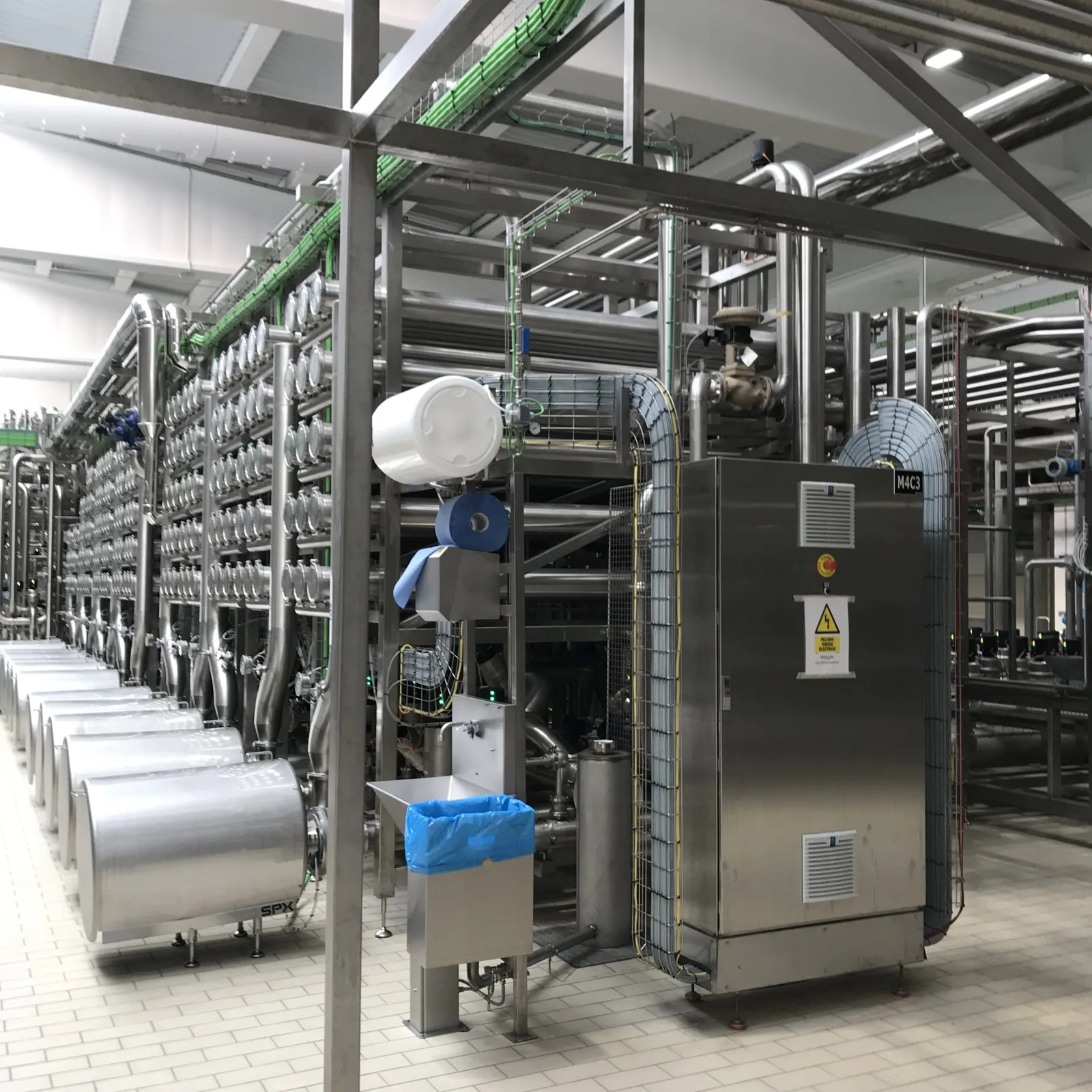
Low-voltage panels are built to the IEC 61439 series, published in Spain as UNE-EN IEC 61439. Its Part 1 sets out the definitions, service conditions, construction requirements, technical characteristics and verification requirements for switchgear assemblies [3]. A panel is an assembly verified as such, with its documentation, and every later modification touches something that someone verified.
In the food sector, a very tightly sealed cabinet with no heat dissipation overheats, and a painted steel one next to cleaning chemicals rusts. We separate power, signals and communications, leave real spare capacity and coordinate the protection devices so that a fault stays isolated on its own line. These are the faults we come across most often:
| Problem | How it shows in production | What is controlled |
|---|---|---|
| Protection without selectivity | A fault in one motor trips the main breaker and stops the line with product half-processed | Protection coordination and sectioning by line |
| Harmonics from variable speed drives | Overheating, tripping and intermittent faults in scales and probes | Power quality measurement, filters or reactors, shielded cable and good earthing |
| Overloaded panel | Extensions hung on the outside; diagrams that do not match what is installed | Planned spare capacity, labelled terminals and diagrams updated after every change |
| Enclosure unsuited to the location | Condensation inside, rusted terminals, tripping after cleaning | IP rating suited to the location, appropriate cable glands, ventilation or air conditioning |
| No consumption metering | Energy only shows up on the overall bill | Per-line power analysers integrated into the SCADA |
| Unsegregated control network | Communication drops between PLCs and SCADA; uncontrolled access | Segmented plant network, permissions and backups |
Dropouts between PLC and SCADA have their own diagnosis, which we cover in PLC–SCADA communication failures.
Machine safety: the Directive today, the Regulation in 2027
Today, machinery is placed on the market and put into service under Directive 2006/42/EC, which Spain applies through Real Decreto 1644/2008 [5]. It is being replaced by Regulation (EU) 2023/1230. The text published in June 2023 set its date of application as 14 January 2027, but a corrigendum in July that year moved it to 20 January 2027, which is also the day the Directive is repealed [6] [7]. Machinery placed on the market in accordance with the Directive before that date may continue to be made available on the market [6].
For a plant that integrates and refurbishes lines, the Regulation brings three points that already need to be taken into account:
- Substantial modification. This is a physical or digital change to a machine already placed on the market or put into service, not foreseen by the manufacturer, that creates a new hazard or increases an existing risk. It counts as substantial if it requires adding guards or protective devices that call for changes to the safety control system, or new stability or mechanical strength measures [6]. Whoever makes it takes on the manufacturer's obligations [6]. Before refurbishing a machine to fit it into a line, this is assessed.
- Control systems. A hardware or logic failure must not lead to hazardous situations, and the system must withstand reasonably foreseeable malicious attempts by third parties [6].
- Protection against corruption. Connecting the machine to another device, including remotely, must not lead to hazardous situations, and the software and data that are critical for safety must be protected [6]. This squarely affects remote access and the plant network.
Its Annex III keeps specific requirements for food machinery: contact surfaces that are smooth and free of cavities where organic matter can build up, easy to clean and disinfect, and cleaning liquids that can be drained off completely [6].
Hygiene: HACCP and an installation that can be cleaned
Regulation (EC) 852/2004 requires food businesses operating after primary production, such as a food factory, to maintain procedures based on HACCP principles: identifying hazards, setting critical control points with their limits, monitoring them, applying corrective actions, verifying, and keeping documents and records that prove it [4]. Much of this can be automated: a limit monitored by the PLC generates an alarm, a record with date and batch and, where appropriate, a lockout, instead of a handwritten note.
The same regulation requires equipment in contact with food to be built and maintained so as to reduce the risk of contamination, to be installed so that the equipment and its surroundings can be cleaned properly, and to be fitted, where necessary, with suitable control devices [4]. In the electrical installation we apply it like this:
- Cables on trays above the equipment rather than along the floor, where they hold water and dirt, but never over exposed product. This is our own criterion, backed by the regulation: it requires overhead fixtures in process rooms to prevent the build-up of dirt and reduce condensation and the shedding of particles [4].
- Stainless steel enclosures in process rooms, with as few protrusions as possible.
- Degree of protection based on how cleaning is actually done: the REBT sets the minimum for the location [1], and where cleaning is done with a jet or under pressure, it is raised according to the equipment and the procedure.
Grain and flour dust: explosive atmospheres
Among the locations made hazardous by dust, ITC-BT-29 expressly mentions the “work, handling and storage areas of the food industry that handles grain and grain derivatives” [1]. They are class II and are divided into zone 20 (dust cloud present permanently or frequently, generally inside ducts and vessels), zone 21 (occasional, for example next to emptying or filling points) and zone 22 (not expected in normal operation and, if it does form, short-lived). The equipment category goes with the zone: category 1 is valid for zones 20, 21 and 22; category 2 for 21 and 22; category 3 only for 22 [1].
Real Decreto 681/2003 requires the employer to classify those areas and to keep an explosion protection document, which is revised with every major modification, extension or alteration [2]. A new conveyor or a filter moved to another spot can shift the zones. In feed mills it is everyday business (feed mill automation).
Control, data and traceability
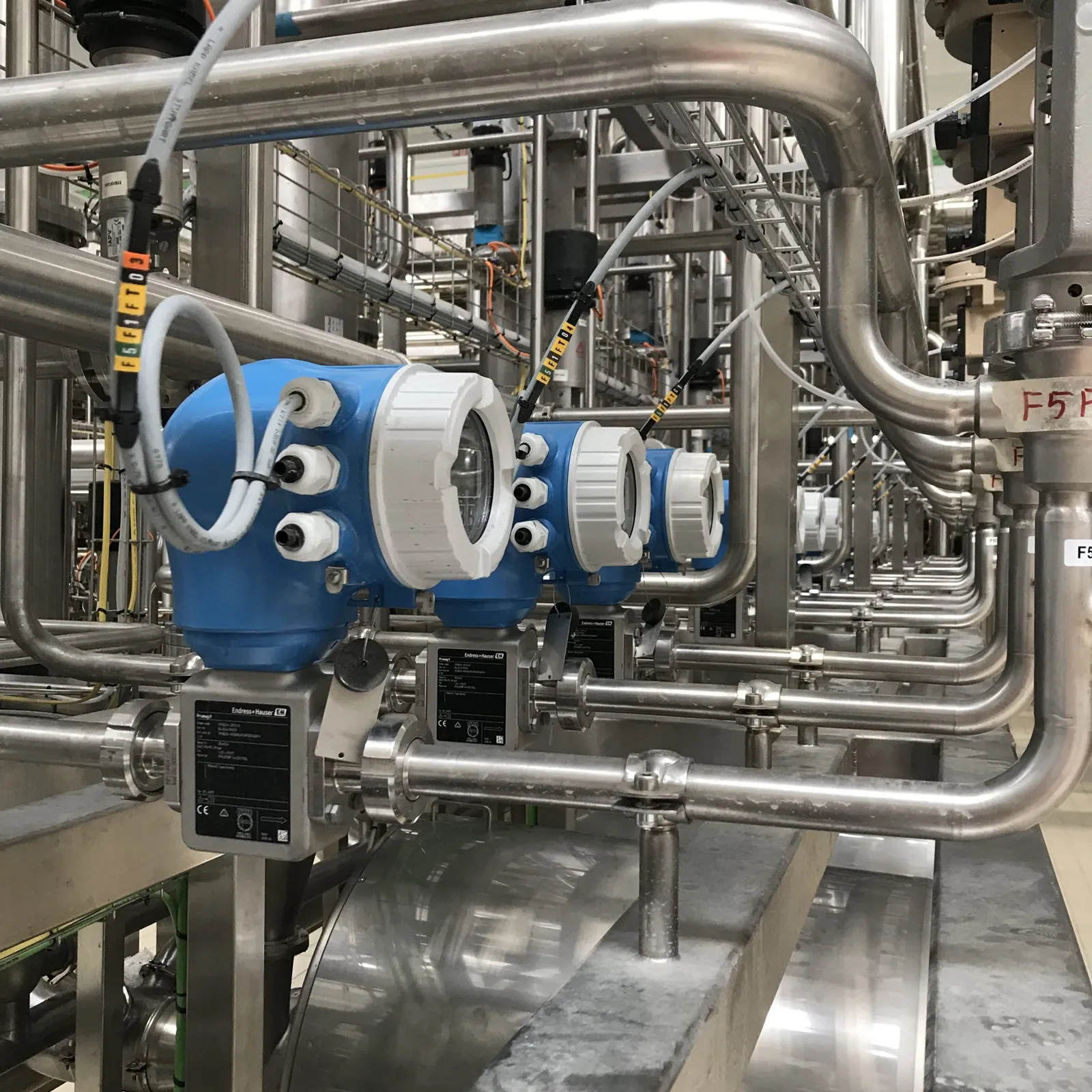
With the installation sorted, control rests on three layers. The PLC runs the logic of each machine and sequence; if you are starting from scratch, begin with what a PLC is. The SCADA system supervises the plant, stores historical data and manages alarms and recipes, with examples from the sector in the guide to SCADA systems. Traceability links each batch to its raw materials, its recipe and its parameters, and food traceability and manual data explains why paper breaks it.
A quick test: which batch was being made when the incident occurred? Who changed the recipe? If the answer is in a notebook, there is work to do. If the plant already has PLCs and SCADA that are years old, the way forward is SCADA and PLC modernisation. Wineries have their own particularities: winery automation.
How we do it at ER Ingeniería
We handle the automation of a food plant from start to finish: design and legalisation of the electrical installation, power and control panels, on-site installation, PLC and SCADA programming, commissioning and technical service with SatER. We have automated 45 agri-food factories; some of them, such as Inalsa, Agrocantabria, Casaseca, Agropal and Piensos Sol, are on our agri-food industry page.
For data we have our own software, SuitER (Client, Server, Reporter and Tracer): production, energy consumption, reports and batch traceability, integrated with the PLCs and the SCADA. If the factory wants to produce part of its own electricity, self-consumption installations are designed together with the electrical installation.
Shall we review your plant?
Tell us what you make, which lines you want to automate and where your production stops today. With that we will tell you where we would start and what the installation will require.
Installations for the food industry Talk to our teamOr call us on 967 140 850
Frequently asked questions about food industry automation
What is automation in the food industry?
It means controlling the intake, dosing, processing, cleaning and packaging of a food factory with programmable logic controllers (PLCs), measuring instruments and a supervisory system (SCADA). The system runs the recipes, monitors the process limits and keeps a record of every batch, which also serves to demonstrate HACCP compliance.
Which processes are automated in a food processing plant?
The usual ones are raw material weighing and intake, dosing and mixing by recipe, heat treatments, CIP cleaning, cold rooms, packaging with checkweighing and batch labelling, and the compressed air, water and steam utilities.
Which electrical regulations apply to a food factory?
In Spain, the Low Voltage Electrotechnical Regulation (Real Decreto 842/2002) with its technical instructions. In food plants the ones that matter most are ITC-BT-30, for damp, wet, dusty or very low-temperature locations, and ITC-BT-29, for locations with a risk of fire or explosion; panels are built to the UNE-EN IEC 61439 series.
What degree of protection does electrical equipment need in a washdown area?
A washing or hose-down area is a wet location under ITC-BT-30: wiring systems must be IPX4, and control and protection devices and socket outlets are installed outside the location or, if that is not possible, protected against water spray. Where cleaning is done with a jet or under pressure, the degree of protection is raised according to the equipment and the cleaning procedure.
Does the electrical installation of a food plant need a design project?
Under ITC-BT-04, a design project is required for new industrial installations over 20 kW, for those in damp, wet, dusty or corrosive locations over 10 kW and for those in locations with a risk of fire or explosion, with no power limit. It is also required for extensions in those special locations, with no minimum power, and for major modifications; for extensions that take an installation over its power threshold; and for extensions to an installation with a design project that, in one go or over several, exceed 50% of the power provided for in it.
When does the new EU Machinery Regulation apply?
Regulation (EU) 2023/1230 applies from 20 January 2027, the date on which Directive 2006/42/EC is repealed; the original text said 14 January and was amended by a corrigendum published in July 2023. Until then the Directive applies, implemented in Spain by Real Decreto 1644/2008.
Does a factory that handles flour or grain have ATEX zones?
Probably: ITC-BT-29 gives as an example of a dust-hazard location the work, handling and storage areas of the food industry that handles grain and grain derivatives. Classifying those areas into zones 20, 21 and 22 is the employer's obligation under article 7 of Real Decreto 681/2003, whose article 8 also requires them to keep an explosion protection document up to date.
Sources
- Real Decreto 842/2002, de 2 de agosto, por el que se aprueba el Reglamento electrotécnico para baja tensión [approving the Low Voltage Electrotechnical Regulation] (ITC-BT-04, ITC-BT-05, ITC-BT-29 and ITC-BT-30). Boletín Oficial del Estado, 224. https://www.boe.es/buscar/act.php?id=BOE-A-2002-18099
- Real Decreto 681/2003, de 12 de junio, sobre la protección de la salud y la seguridad de los trabajadores expuestos a los riesgos derivados de atmósferas explosivas en el lugar de trabajo [on the protection of the health and safety of workers exposed to risks from explosive atmospheres in the workplace] (arts. 7 and 8). Boletín Oficial del Estado, 145. https://www.boe.es/buscar/act.php?id=BOE-A-2003-12099
- International Electrotechnical Commission. (2020). IEC 61439-1:2020 Low-voltage switchgear and controlgear assemblies. Part 1: General rules. https://webstore.iec.ch/en/publication/32338
- Regulation (EC) No 852/2004 of the European Parliament and of the Council of 29 April 2004 on the hygiene of foodstuffs (Art. 5 and Annex II, Chapters II and V). Official Journal of the European Union, L 139. https://www.boe.es/buscar/doc.php?id=DOUE-L-2004-81035
- Real Decreto 1644/2008, de 10 de octubre, por el que se establecen las normas para la comercialización y puesta en servicio de las máquinas [laying down the rules for placing machinery on the market and putting it into service]. Boletín Oficial del Estado, 246. https://www.boe.es/buscar/act.php?id=BOE-A-2008-16387
- Regulation (EU) 2023/1230 of the European Parliament and of the Council of 14 June 2023 on machinery (Arts. 3, 18, 51, 52 and 54; Annex III, points 1.1.9, 1.2.1 and 2.1.1). Official Journal of the European Union, L 165. https://www.boe.es/buscar/doc.php?id=DOUE-L-2023-80916
- Corrigendum to Regulation (EU) 2023/1230 of the European Parliament and of the Council of 14 June 2023 on machinery. Official Journal of the European Union, L 169, 4 July 2023. https://www.boe.es/buscar/doc.php?id=DOUE-L-2023-80952