

SCADA systems: what they are, how they work and what they monitor in an agri-food plant
PLC and SCADA · Technical guide
A SCADA system (Supervisory Control and Data Acquisition) is the set of software and equipment that collects real-time signals from a plant's programmable logic controllers (PLCs), presents them to the operator on process screens, raises alarms when something goes outside normal conditions, stores the history of what has happened and lets you issue commands from a central workstation: start a line, change a setpoint, launch a formula.
It is the screen from which, in a feed mill, you can see the intake pit, the silos, the scales and the pellet mill, and follow each batch all the way to the lorry; in a winery, it is the one that shows the temperature of each fermenting tank. At ER Ingeniería we have automated 45 agri-food factories, and this guide explains how a SCADA is built inside, which standards serve as a reference for designing it and what it supervises in each type of plant. At the end we link to videos of three feed mills running SuitER, our software.
The short version: the PLC decides, on every cycle, what each motor and each valve does; the SCADA brings together what is happening across the whole plant, displays it, raises alarms and records it. In a well-designed architecture, if the SCADA server goes down, the PLCs keep controlling the process. You lose the overall view and, without a backup, part of the record.
On this page
- What a SCADA system is and what it is used for
- How it works: the layered architecture
- How it talks to PLCs: Modbus TCP, PROFINET and OPC UA
- SCADA, HMI, PLC and MES: how they differ
- Standards-based best practice: alarms, screens and cybersecurity
- A SCADA system in an agri-food plant
- Feed mills with SuitER: Inalsa, Agrocantabria and Casaseca
- The phases of a SCADA project
- Frequently asked questions
- Sources
What a SCADA system is and what it is used for
The term was coined for networks spread across a wide area. The glossary of NIST, the US National Institute of Standards and Technology, defines it as a system that collects and processes data and applies control over long distances [1]. Its security guide for industrial systems describes SCADA as systems that control dispersed assets, where centralised data acquisition matters as much as control: power grids, oil pipelines, water supply [2]. In a factory, with all the PLCs on the same site, the idea is the same: seeing from one place what is happening in many.
It has six functions in the plant:
- Supervision: mimic diagrams showing the status of each piece of equipment and the process values (weights, temperatures, levels).
- Supervisory control: commands and setpoints from the workstation; the SCADA writes them to the PLC and the PLC acts on them.
- Alarms: notification of every abnormal situation, with priority, acknowledgement and logging.
- Trends: graphs of variables over time, to see how a problem came about.
- History: values, events and user actions; who changed which setpoint and when.
- Reports: production by shift or by batch, consumption, stoppages.
How a SCADA system works: the layered architecture
Industry reference models, such as the Purdue model or the ISA-95 levels (published internationally as IEC 62264), arrange a factory's systems into levels, from the physical process to business management, and the NIST guide proposes them for organising the plant network [2]. The SCADA sits at the supervisory level, between the PLCs and the MES (manufacturing execution system) or the ERP (enterprise resource planning system). Inside, it is made up of these components:
| Layer | What it contains | What it does | In a feed mill |
|---|---|---|---|
| Field | Sensors, instruments and actuators | Measure and actuate | Scale load cells, silo level detectors, temperature probes, gates, motors |
| Control | PLC and, in dispersed installations, RTU | Runs the logic: sequences, interlocks, recipes | The dosing and mixing sequence; stopping a conveyor from starting if the next one is stopped |
| Communications | Industrial network, switches, gateways, protocols | Carries data between PLCs and servers | Industrial Ethernet between the electrical panels and the control room |
| SCADA server | Communication drivers, tag database, alarm manager | Reads the PLCs, processes the data and serves it to the workstations | One tag for each weight, motor status or silo level |
| Historian | Time-series and event database | Stores values, alarms and actions | Actual weighings for each batch, consumption, stoppages |
| Operator workstations | SCADA clients, HMI (human-machine interface) screens, tablets | Display the process and take commands | Control room, production office, tablet next to the pellet mill |
Each data point is a variable (a tag) with its name, its address in the PLC, its units and its alarm limits. The server reads the tags cyclically from each PLC, or receives the changes if the protocol allows it, and distributes them to screens, alarms and the historian. The RTU (remote terminal unit) is for remote sites such as wells or pumping stations; inside a factory almost everything is PLC-based, and how a PLC works is explained in what is a PLC.
How a SCADA system talks to PLCs: Modbus TCP, PROFINET and OPC UA
Between the server and the PLCs there is a communication protocol. In agri-food plants we mainly come across these three, often together:
| Protocol | Maintained by | What we use it for | Worth knowing |
|---|---|---|---|
| Modbus TCP | Modbus Organization | Reading and writing registers on equipment from many manufacturers: variable speed drives, power analysers, meters, scales | Runs over TCP/IP and uses port 502, reserved for Modbus [3] |
| PROFINET | PROFIBUS & PROFINET International (PI) | Real-time industrial Ethernet between the PLC, distributed I/O and drives | It is an open industrial Ethernet standard [4] |
| OPC UA | OPC Foundation | Data exchange between SCADA, MES, ERP and equipment from different manufacturers | Available since 2008, it is platform-independent (from microcontroller to cloud), includes encryption, authentication and auditing, and an information model to describe the data [5] |
If all the PLCs are from one brand, its native protocol is usually the shortest route; to combine manufacturers or pass data up to business systems, OPC UA brings a lot of order. When communication fails (frozen values, gaps in the history), diagnosis goes layer by layer, and the step-by-step guide is in PLC–SCADA communication failures.
SCADA, HMI, PLC and MES: how they differ
Each one solves a different part of the problem:
| System | What it does | Where it sits | Example in a feed mill | What it does not do |
|---|---|---|---|---|
| PLC | Runs the control logic in real time | In the electrical panel, next to the machines | Dosing a formula, starting conveyors in sequence, stopping if there is a blockage | Gives no plant-wide view and keeps no long-term history |
| HMI | Screen for operating a machine or an area | On the panel door or on the machine | Pellet mill touch panel | Cannot see the rest of the plant. An HMI can be part of a SCADA system |
| SCADA | Supervises the whole plant: mimic diagrams, alarms, trends, history, commands | Server and workstations in the control room, office, tablet or mobile | Viewing everything from intake pit to dispatch, issuing orders, tracking each batch | Does not replace the PLC in controlling the machines |
| MES | Manages production execution: orders, batches, yields, quality | Plant server, above the SCADA | Scheduling orders and closing each batch with its actual consumption | Does not read field signals: it takes the data from the SCADA or the PLCs |
In medium-sized agri-food plants the line between SCADA and MES is blurred: many SCADA systems in the sector handle orders, formulas, batches and traceability, like our SuitER. Above them sits the ERP (purchasing, stock, invoicing), which should not control machines.
Standards-based best practice: alarms, screens and cybersecurity
Alarms, screens and cybersecurity each have an international standard, and those standards are the reference a SCADA system should be designed against.
Alarms: ISA-18.2 and IEC 62682
The reference is ANSI/ISA-18.2-2016, on the management of alarm systems for the process industries [6]. The IEC catalogue contains a standard with the same title, IEC 62682, whose second edition dates from 2022 [7]. ISA-18.2 covers the complete alarm lifecycle, from identification and rationalisation to implementation, maintenance and management of change. At its core is a documented alarm philosophy, the reference for design decisions, performance and what is expected of the operator; prioritisation has its own requirements [6].
A practical rule to start with: if the operator has nothing to do in response to a notification, it is not an alarm. It is an event, and it goes to the log. Every alarm that remains is rationalised: cause, consequence, what the operator must do, how quickly and with what priority.
A typical scenario in a feed mill: after a power cut, the restart triggers dozens of stopped-motor notifications, and the one that matters, a blocked elevator, gets lost among them. It is fixed with priorities, by suppressing what makes no sense in the current state of the line (with the line stopped, a stopped motor is not an anomaly) and by reviewing the alarms that trigger most often.
Screens: ISA-101
For screens there is ANSI/ISA-101.01-2015, on human-machine interfaces for process automation systems. It deals with them throughout their lifecycle (design, implementation, operation and continuous improvement), and its key areas are display structure, user interaction and operator training [8]. In practice it usually translates into a hierarchy of screens (plant, area, equipment, detail) and the same symbols across the whole installation.
Cybersecurity: IEC 62443
The ISA/IEC 62443 series defines the requirements and processes for implementing and maintaining secure industrial automation and control systems [9]. The NIST guide for industrial systems puts this into practice: it starts from the fact that many industrial protocols have no authentication of any kind and proposes separating the plant network from the corporate network with firewalls or a demilitarised zone (DMZ), preventing business systems from talking directly to control equipment, requiring two-factor authentication for remote access and keeping backups with tested recovery plans [2]. In a factory SCADA, that comes down to:
- Plant network separated from the office network, with a controlled crossing point.
- Remote maintenance access with two-factor authentication, authorisation and logging, never a remote desktop open to the internet.
- One user account per person, so you know who changed each setpoint.
- Backups of PLCs, SCADA and databases, and restoration that has been tested.
A SCADA system in an agri-food plant
The skeleton is the same in any factory; what changes is what is supervised and what gets recorded. This is how it looks in the three types of plant we work in most:
| Plant | What the SCADA supervises | Typical alarms | What gets recorded |
|---|---|---|---|
| Feed mill | Intake pit reception and routing to silos, grinding, dosing and micro-dosing, mixing, pelleting, cooling, dispatch | Blocked elevator or screw conveyor, weight deviation on a scale, high silo level, motor overload | Formula and actual weighings for each batch, source silo of each raw material, destination of each load |
| Winery | Temperature of each tank, cooling production, pumping over, racking and cleaning | Temperature outside setpoint, chiller failure, valve not confirming its position | Temperature curve of each tank and the operations carried out on it |
| Food industry | Tanks and heat treatments, CIP cleaning (in a closed circuit, without dismantling), packaging lines, refrigeration, air and steam utilities | Treatment temperature or time outside limits, incomplete cleaning | Temperatures and times for each batch, cleaning cycles carried out and their parameters |
Each one has its own article covering the process stage by stage: feed mill automation, winery automation and automation in the food industry.
Regulation (EC) No 178/2002 requires food and feed business operators to be able to identify who supplied them with each material and which businesses they have supplied their products to [10]. What happens inside the factory (which material from which silo went into which batch) is the stretch that a SCADA with automatic recording covers best. There is more in food traceability and manual records.
Feed mills with SuitER: Inalsa, Agrocantabria and Casaseca
Each one has its video on our website and on our YouTube channel.
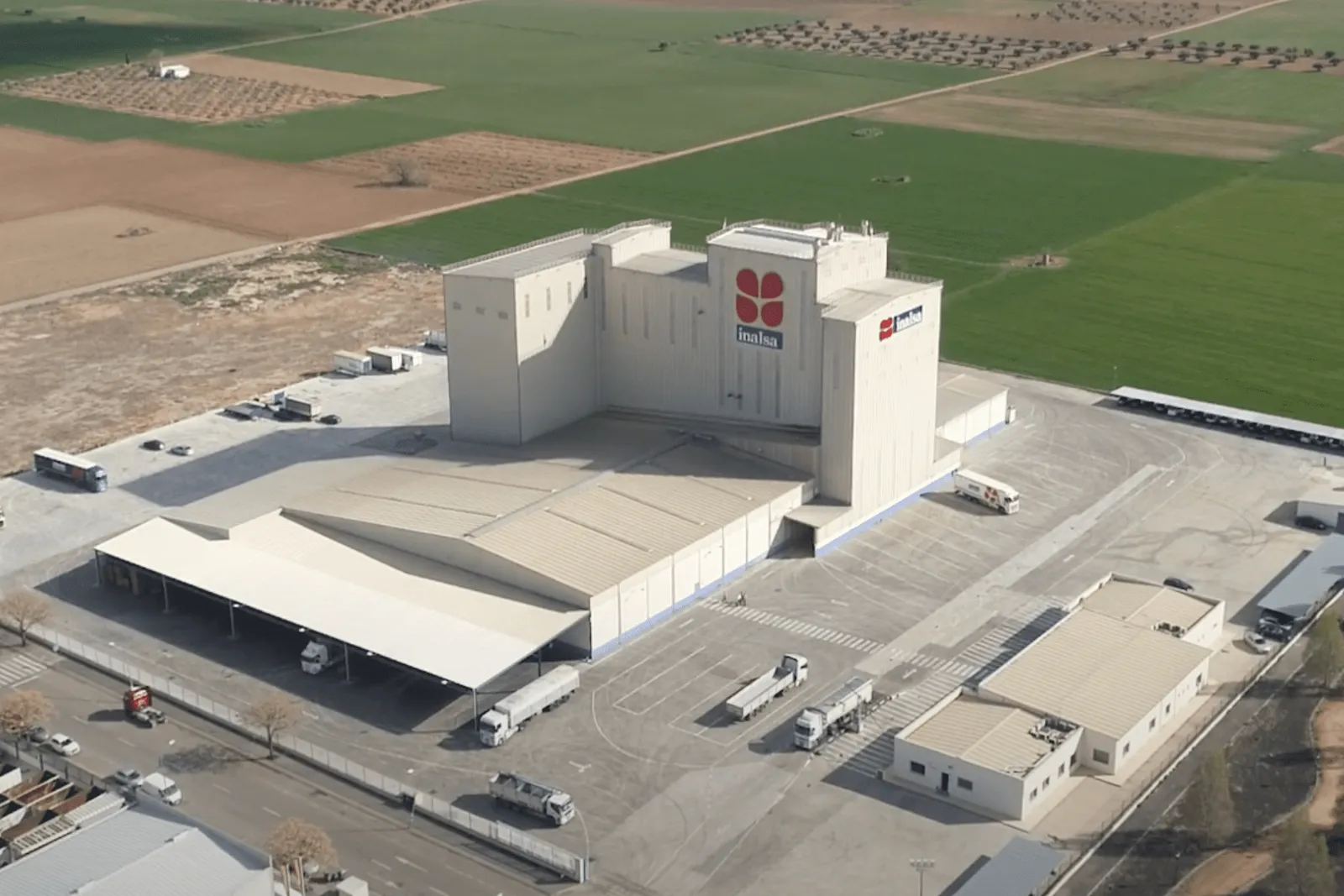
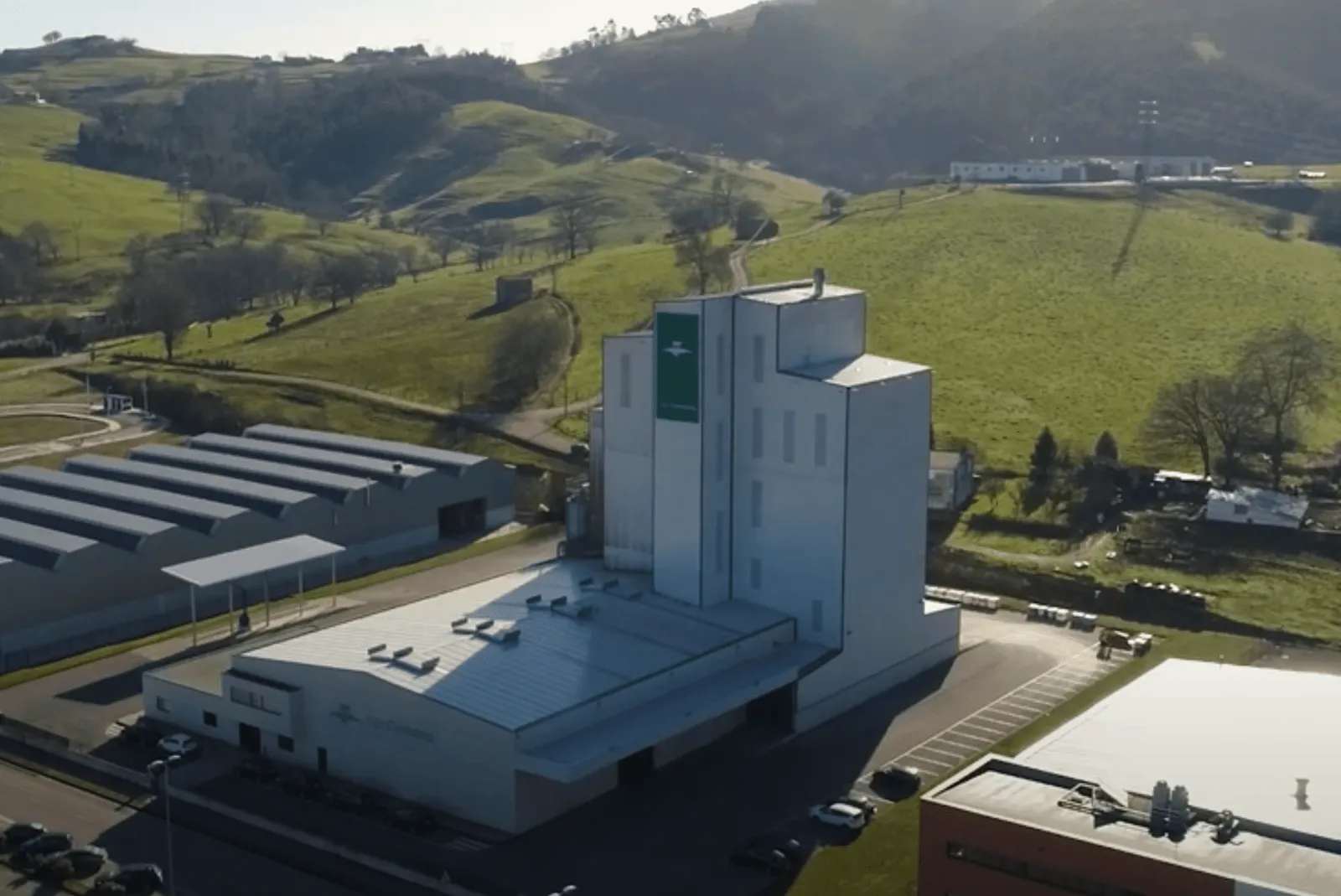

SuitER, our industrial software, follows the architecture described above. SuitER Server connects the PLC network with the business network and stores the data in a database in real time; because it sits between the two networks, it is the crossing point that needs protecting. SuitER Client is the workstation for operators, plant managers and senior management, in the control room, the office, on a tablet or on a mobile. ReportER generates and exports the reports. SuitER Tracer links each batch to its origin, its formula and its production parameters, and integrates with the ERP, formulation software and NIR (near-infrared) analysers. The modules and the videos are on the SuitER page.
The phases of a SCADA project
We handle the electrical work, the PLCs and the SCADA with the same team, and the project goes through these phases:
- Plant walkthrough and signal list. What equipment there is, which PLCs and with what communications, what is done by hand today.
- Functional specification. Screens and their style guide, alarm philosophy and alarm list, what is stored in the history and how often, reports, users and permissions.
- Programming and pre-testing. The PLC and SCADA program is tested before commissioning.
- Commissioning by area. On-site tests with the real process (SAT), planned together with production to keep stoppages to a minimum.
- Training and support. Training for production, maintenance and quality staff on their own plant; afterwards, support from SatER, our technical service.
If there is already a SCADA in place and it needs replacing because it runs on an unsupported computer, the hard part is migrating without stopping production; how to do it is covered in SCADA and PLC modernisation in agri-food plants.
Shall we talk about your plant's SCADA?
Tell us what you produce, which PLCs you have and what you can see today from the control room. We will tell you which architecture fits and where to start, whether you are starting from scratch or already have a system.
Winery and Feed Mill Automation SuitER Software Talk to our teamOr call us on 967 140 850
Frequently asked questions about SCADA systems
What is a SCADA system and what is it used for?
It is the software and equipment that collect real-time data from a plant's PLCs, display it on screens, raise alarms, store history and let you issue commands from a central workstation. It is used to operate the whole plant from one place and keep a record of every batch.
What is the difference between SCADA and PLC?
The PLC is the controller that directly controls machines and sequences in real time, from the electrical panel. The SCADA sits above it: it reads the data from all the PLCs, displays it, manages the alarms, stores history and sends the operator's commands, which the PLC carries out.
Are SCADA and HMI the same thing?
No. An HMI is a screen for operating a machine or an area; a SCADA system supervises the whole plant, with a server, several workstations, alarms and history. An HMI can be part of a SCADA system, but on its own it is not one.
What types of SCADA systems are there?
By architecture, they range from a single workstation reading a few PLCs to client-server systems with several workstations and a historian, and on to systems spread across several plants. In agri-food factories, client-server is the norm.
Which protocols does a SCADA system use to communicate with PLCs?
The ones we come across most in agri-food plants are Modbus TCP, PROFINET and OPC UA, as well as each PLC manufacturer's own protocols. OPC UA is platform-independent and is used to bring together equipment from different brands and pass data to the MES and the ERP.
What SCADA software is there?
Each major automation manufacturer has its own, such as Siemens WinCC or Rockwell FactoryTalk View, and there are sector-specific programs. In feed mills and agri-food plants we implement SuitER, our in-house software, which combines supervision with traceability and reporting.
Is it safe to connect a SCADA system to the internet?
Not directly. The NIST guide for industrial systems recommends separating the plant network from the office network with a controlled crossing point, requiring two-factor authentication for remote access and keeping backups with recovery plans that are prepared and tested.
Sources
- National Institute of Standards and Technology. (n.d.). Supervisory control and data acquisition (SCADA). CSRC Glossary. https://csrc.nist.gov/glossary/term/supervisory_control_and_data_acquisition
- Stouffer, K., Pease, M., Tang, C., Zimmerman, T., Pillitteri, V., Lightman, S., Hahn, A., Saravia, S., Sherule, A., & Thompson, M. (2023). Guide to Operational Technology (OT) Security (NIST SP 800-82 Rev. 3). National Institute of Standards and Technology. https://csrc.nist.gov/pubs/sp/800/82/r3/final
- Modbus Organization. (2006). MODBUS Messaging on TCP/IP Implementation Guide V1.0b. https://www.modbus.org/file/secure/messagingimplementationguide.pdf
- PROFIBUS & PROFINET International. (n.d.). Technologies. https://www.profibus.com/technology
- OPC Foundation. (n.d.). Unified Architecture. https://opcfoundation.org/about/opc-technologies/opc-ua/
- International Society of Automation. (n.d.). ISA18 Series of Standards: ANSI/ISA-18.2-2016, Management of Alarm Systems for the Process Industries. https://www.isa.org/standards-and-publications/isa-standards/isa-18-series-of-standards
- International Electrotechnical Commission. (2022). IEC 62682:2022 Management of alarm systems for the process industries. https://webstore.iec.ch/en/publication/65543
- International Society of Automation. (n.d.). ISA101 Standards: ANSI/ISA-101.01-2015, Human Machine Interfaces for Process Automation Systems. https://www.isa.org/standards-and-publications/isa-standards/isa-101-standards
- International Society of Automation. (n.d.). ISA/IEC 62443 Series of Standards. https://www.isa.org/standards-and-publications/isa-standards/isa-iec-62443-series-of-standards
- Regulation (EC) No 178/2002 of the European Parliament and of the Council of 28 January 2002 laying down the general principles and requirements of food law (Art. 18). Official Journal of the European Communities, L 31. https://eur-lex.europa.eu/legal-content/ES/TXT/?uri=CELEX:02002R0178-20260101